A voice-first study buddy · Singapore syllabus-aligned

Students learn best when they teach.

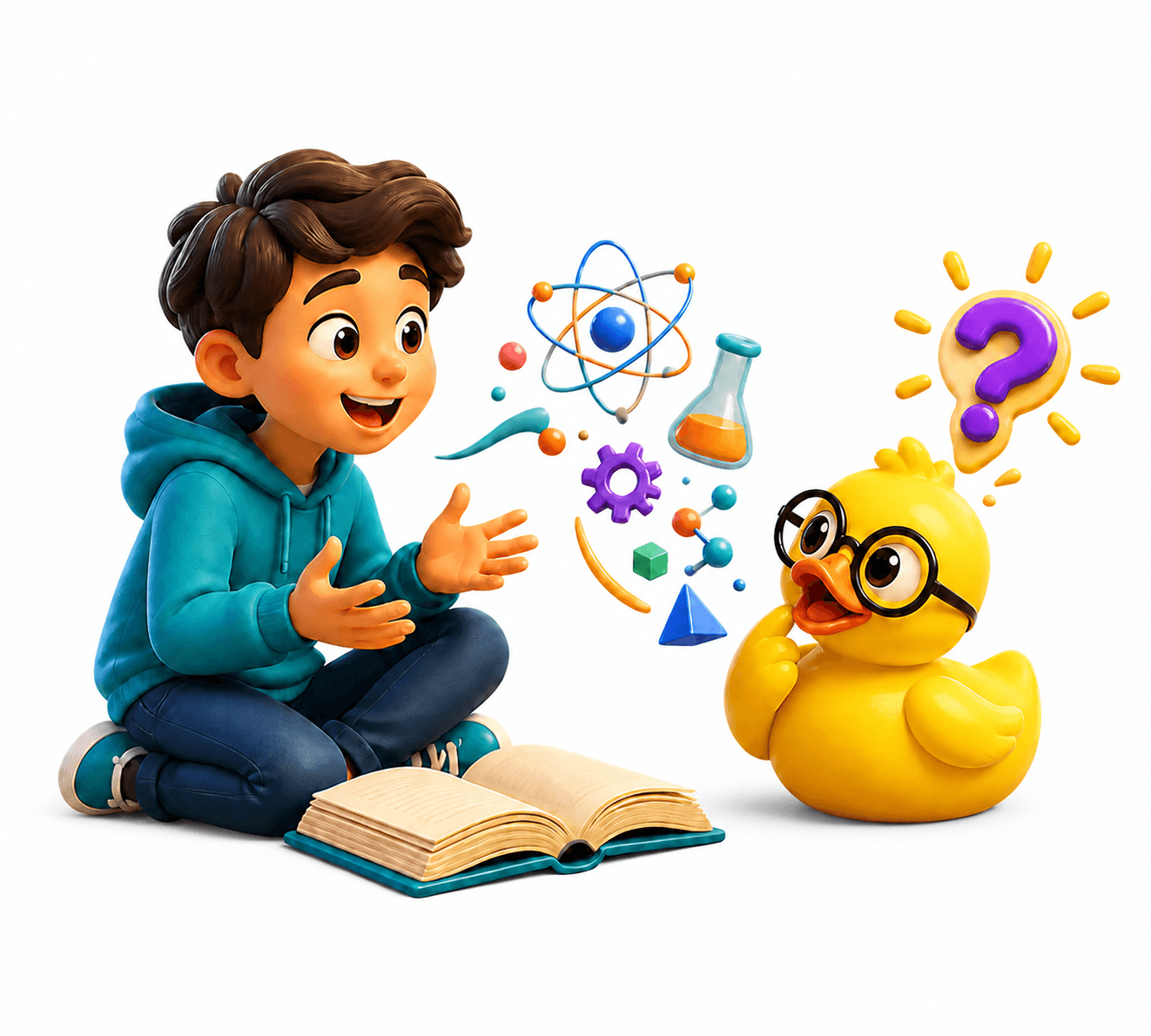
RubberDuck is an AI study buddy that helps upper-primary and lower-secondary students master concepts, and find their voice, by explaining what they know out loud to a patient little duck. Not by memorising answers.

For parents, schools & tuition centres. No spam, just launch news.
Live session
Photosynthesis · P5 Science
Nice thinking! So where in the leaf does that actually happen?
RubberDuck listening
You: “It turns water and CO₂ into glucose.”
Understanding72%
Report ready
Aligned to the Singapore syllabus· AI-safe by design· Voice-first, no typing· Built for Primary 4 to Secondary 2
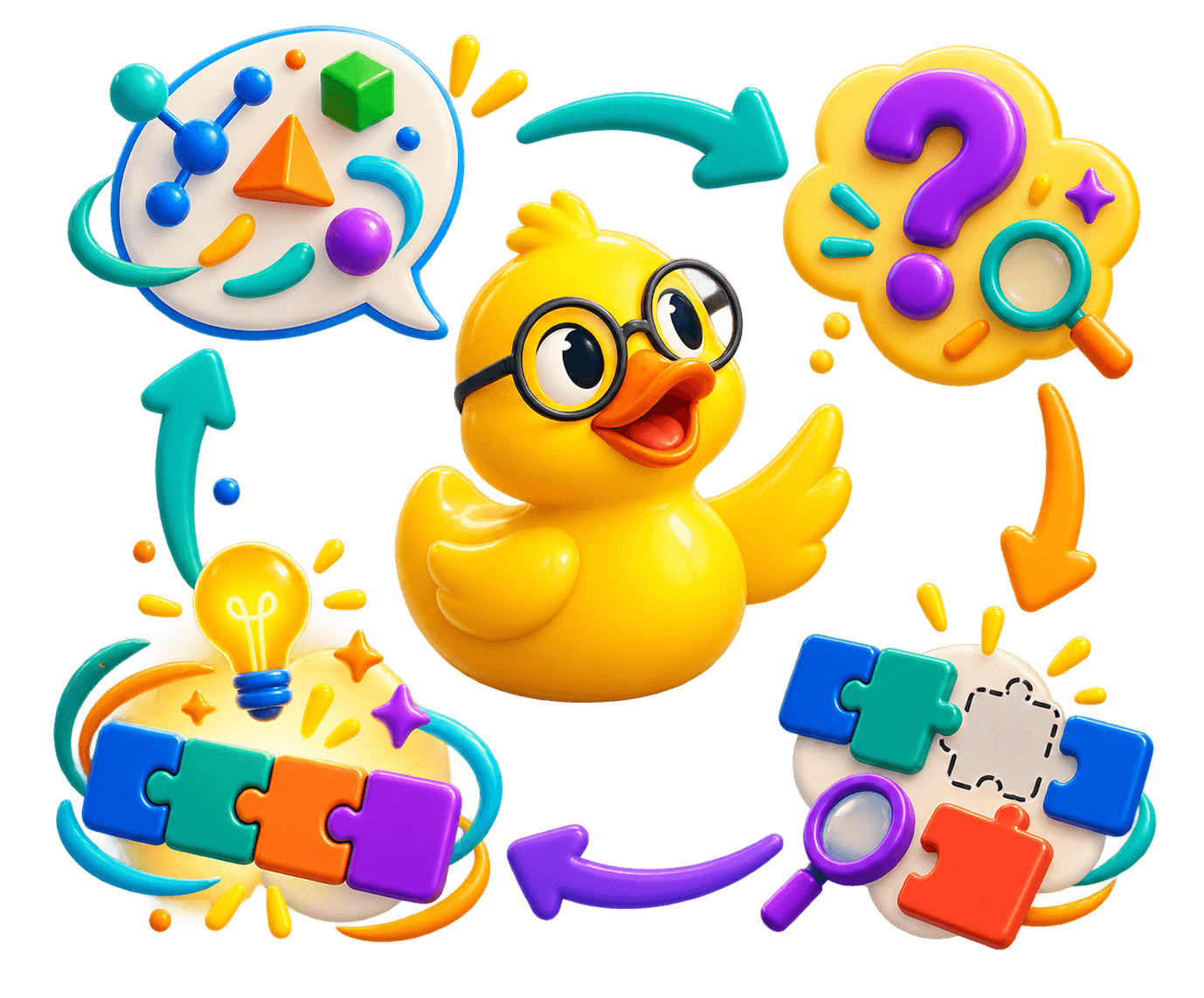
The teach-the-duck loop

How it works

No worksheets, no flashcards. Your child picks a topic and simply explains it out loud, and the duck does the rest.

1

Pick a topic

Choose a concept from the Singapore syllabus: fractions, photosynthesis, a comprehension passage.

2

Teach the duck out loud

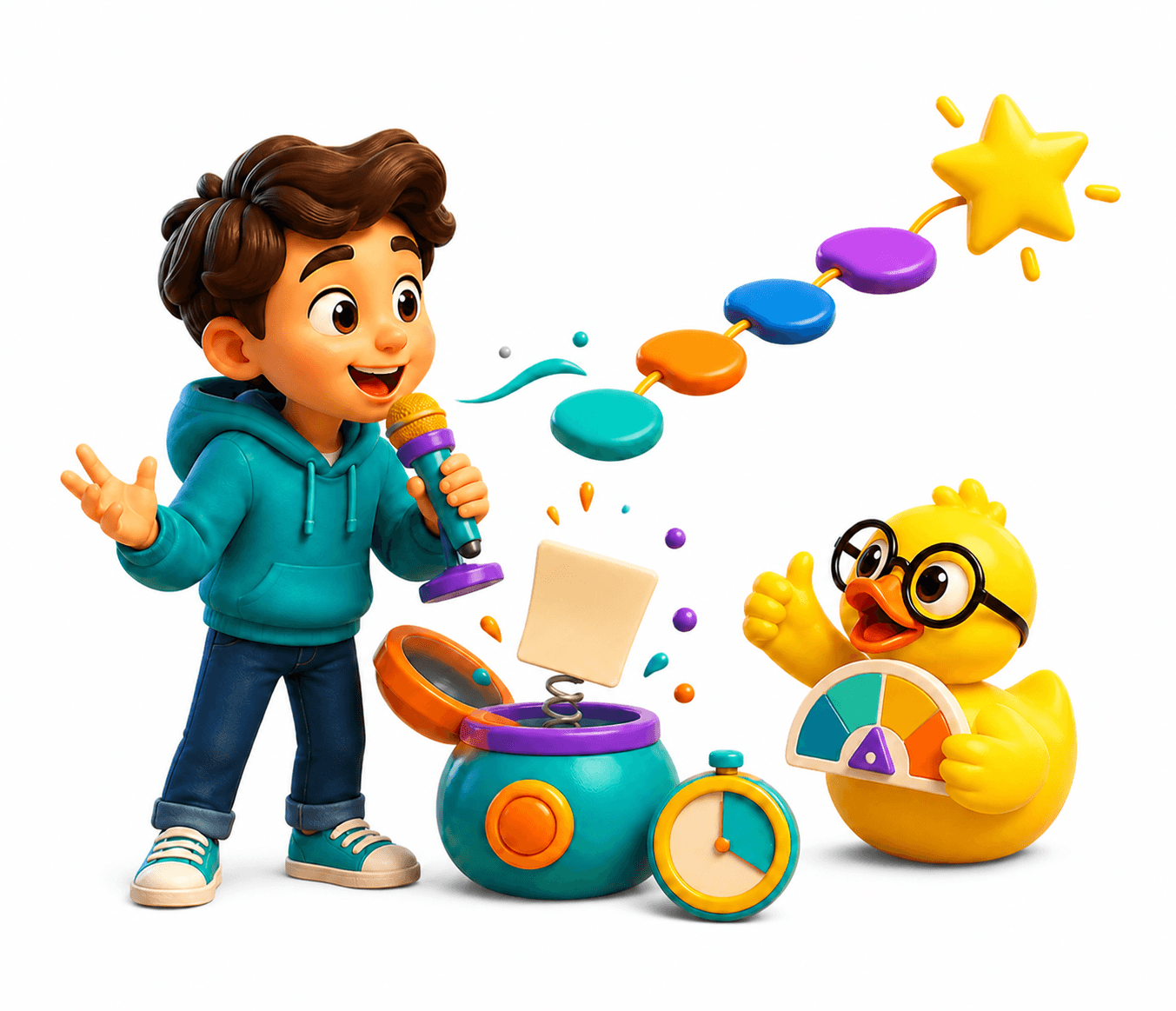
Your child explains it in their own words. The duck listens, then asks “why?” and “what if?”, gently probing the gaps.

3

See what stuck

A plain-English report shows what's mastered and what to revisit, for your child, and for you.

Why it works

Built on how learning actually happens

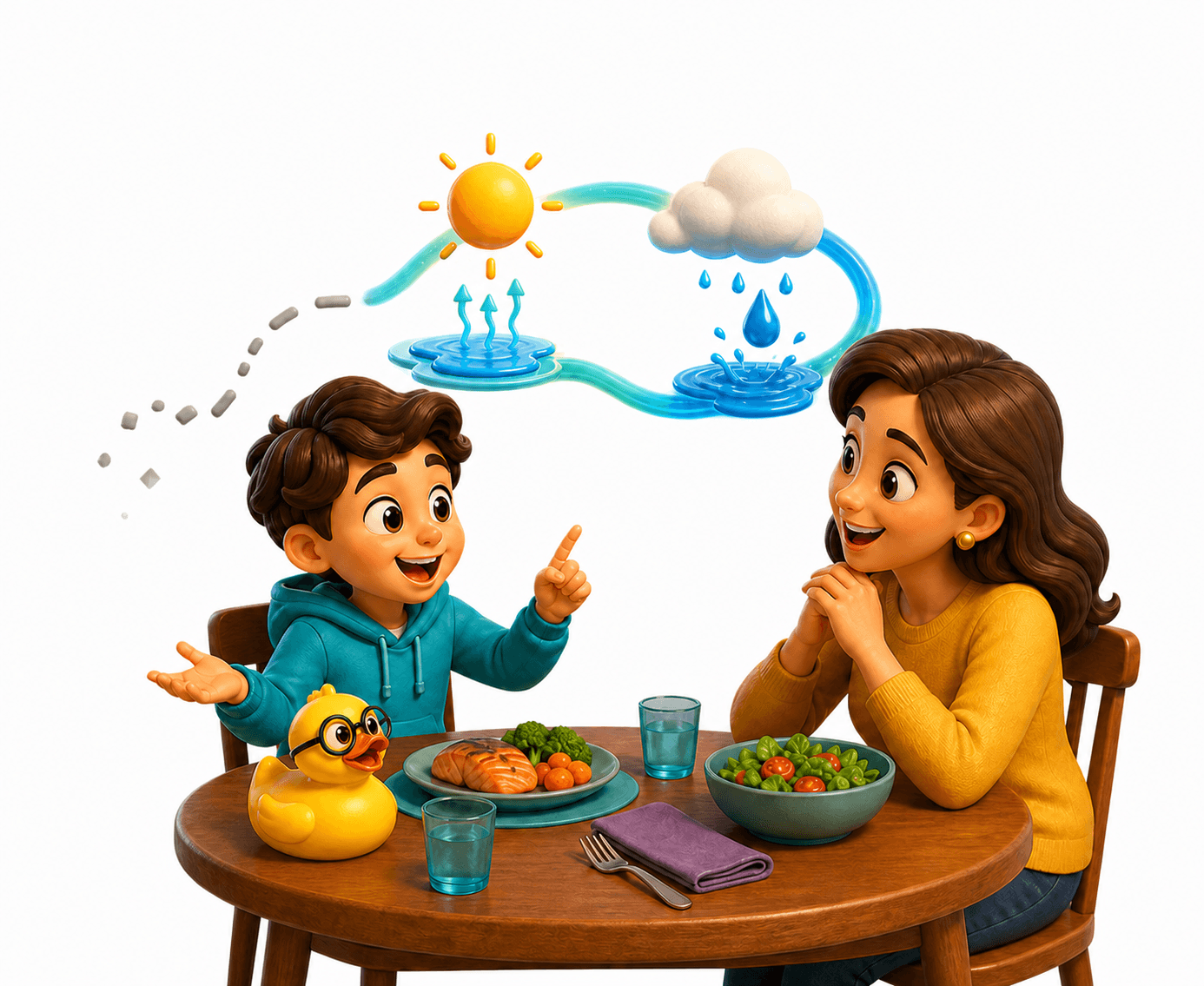
Teaching isn't just a nice idea. It's one of the most studied ways to learn. When children explain a concept, connect it to real-world examples, and answer “why?”, they understand far more than they do from re-reading or rote memorising.

The protégé effect

When students teach a character instead of studying for themselves, they put in more effort and learn more, and the gains are largest for the children who are struggling most.

Chase, Chin, Oppezzo & Schwartz, J. Science Education & Technology, 2009
Expecting to teach

Learners who study a topic expecting to teach it recall more, organise their knowledge better, and remember the most important points, versus studying just to pass a test.

Nestojko, Bui, Kornell & Bjork, Memory & Cognition, 2014
Explaining reveals gaps

Prompting students to explain in their own words improves both recall and the ability to transfer ideas to new problems. A meta-analysis of 69 comparisons found a large average benefit.

Chi et al., 1994 · meta-analysis Bisra et al., 2018 (g ≈ 0.66)
“The biggest gains went to the students who were struggling the most.” Why we built RubberDuck for every learner, not just the confident ones.
References. Chase, C. C., Chin, D. B., Oppezzo, M. A., & Schwartz, D. L. (2009). Teachable agents and the protégé effect. Journal of Science Education and Technology, 18, 334–352. · Nestojko, J. F., Bui, D. C., Kornell, N., & Bjork, E. L. (2014). Expecting to teach enhances learning. Memory & Cognition, 42(7), 1038–1048. · Chi, M. T. H., De Leeuw, N., Chiu, M.-H., & Lavancher, C. (1994). Eliciting self-explanations improves understanding. Cognitive Science, 18(3), 439–477.
For parents

See understanding grow, not just grades.

A weekly report in plain English. What clicked this week, and exactly what to revisit next.
Confidence and communication. Explaining out loud builds the skill of putting ideas into words.
Safe and focused. Guided conversations only: no open chat, no distractions.
Aligned to school. Practice maps to the Singapore syllabus, so it reinforces class.
Join the waitlist
This week · Ava, P5 4 sessions
Fractions: equivalent & simplifyingMastered
PhotosynthesisGetting there
Comprehension: inferenceRevisit
Focus next: Ava can define photosynthesis but pauses on where it happens. A quick chat about the leaf will help it click.
Class 5B · Science Topic · Photosynthesis
Marcus T.Mastered
Priya S.In progress
Wei Jie L.Mastered
Nurul H.Revisit
18 of 24 students can explain the concept unprompted.
For schools & tuition centres

A patient teaching assistant for every student.

A class dashboard. See who's mastered what, and who needs a second look, at a glance.
Concept checks without marking. RubberDuck assesses understanding through conversation, and summarises it.
Curriculum-aligned. Maps to your scheme of work and the MOE syllabus.
Runs as a supplement. Ten minutes of teaching-practice a day, at home or in class.
Request a pilot
Made for Singapore

Aligned to the MOE syllabus

Every topic maps to what your child is actually learning in school, from upper primary through lower secondary.

Mathematics

Fractions Ratio Area & volume Algebra basics

Science

Photosynthesis Matter Electrical systems The cell

English

Comprehension Inference Summary Oral practice
Levels: Primary 4 Primary 5 Primary 6 Secondary 1 Secondary 2

Safe by design, because it's built for children

No open chat
RubberDuck only discusses the topic your child chose. No open-ended conversation, no rabbit holes.
Age-appropriate
Every prompt and response is tuned for upper-primary and lower-secondary learners.
Private by default
Sessions stay with your family or school. We never sell data or use it for ads.
Understanding, not answers
The duck asks questions rather than handing over answers, so the thinking stays with your child.

Questions, answered

Yes. There's no open-ended chat. RubberDuck only talks about the topic your child chose, in age-appropriate, guided conversation, with no ads, no open internet, and we never sell your data.
RubberDuck

Give your child the confidence that comes from truly understanding.

Join the waitlist and be first to teach the duck. We're onboarding families, schools, and tuition centres in Singapore.

No spam, just launch news. Unsubscribe anytime.